Subtotal $0.00

Living with a disability in Australia can present unique challenges from managing daily tasks and accessing healthcare to finding meaningful community connections. The National Disability Insurance Scheme (NDIS) was established to address these challenges head-on, offering eligible Australians the funded supports they need to live more independently and participate fully in their communities.
Navigating the NDIS can feel overwhelming, especially when you are first starting out. Understanding what the scheme offers, who qualifies, and how to make the most of a plan is essential for participants and their families alike. This guide breaks it all down in plain language, so you can approach the process with clarity and confidence.
What Is the NDIS?
The National Disability Insurance Scheme is a federal government initiative managed by the National Disability Insurance Agency (NDIA). It was introduced to replace the previous fragmented disability support system with a single, nationally consistent framework that puts the individual at the centre of their care.
Rather than offering one-size-fits-all services, the NDIS takes a person-centred approach. Each participant receives a tailored plan based on their goals, functional needs, and circumstances. Funding is provided to help participants access the specific supports and services that will make the most difference in their lives.
Who Is Eligible for the NDIS?
To access the NDIS, a person must meet the following eligibility criteria:
- Be under 65 years of age when applying
- Be an Australian citizen, permanent resident, or hold a Protected Special Category visa
- Have a permanent and significant disability that substantially affects their ability to take part in everyday activities
- Require support now and into the future due to the disability
It is important to note that the NDIS is not means-tested eligibility is based on disability-related need, not income or assets. Early intervention supports may also be available for children under seven years of age or people of any age where early support is likely to reduce long-term needs.
What Supports Can the NDIS Fund?
NDIS funding is broad and flexible, covering a wide range of supports across three key budget categories:
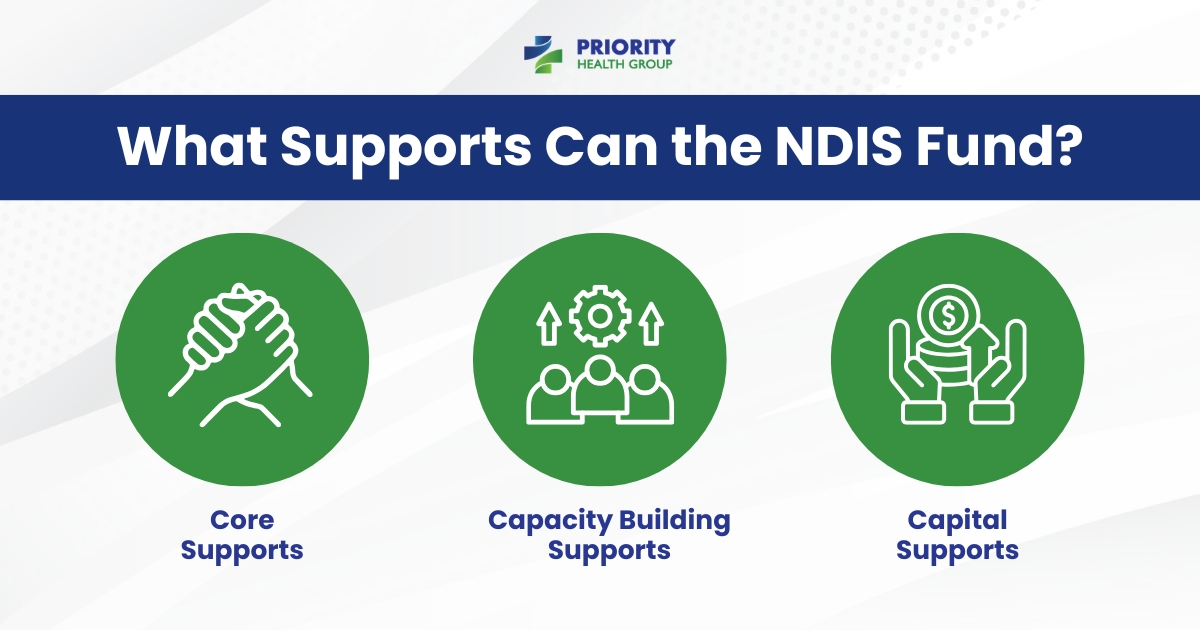
1. Core Supports
These are the day-to-day supports that help participants with activities of daily living, including personal care, community participation, consumables, and transport. Core supports are the most flexible category and can generally be used interchangeably.
2. Capacity Building Supports
These supports help participants build independence and skills over time. This may include support coordination, improved living arrangements, employment support, and improved health and wellbeing programs.
3. Capital Supports
This category covers assistive technology and home or vehicle modifications one-off purchases or changes to the participant’s environment that improve their ability to function independently.
The Role of Support Coordination
For many NDIS participants, navigating the scheme can feel overwhelming particularly when plans are first approved. This is where support coordination plays a vital role. A support coordinator helps participants understand their plan, connect with service providers, and ensure their funding is used in a way that aligns with their goals.
Choosing the right support coordinator or NDIS service provider makes a real difference in a participant’s experience. Innovative Registered Ndis providers like Kuremara are redefining what quality NDIS support looks like by combining compassionate care with practical, community-focused services that genuinely empower participants.
How to Apply for the NDIS
Applying for the NDIS involves a few straightforward steps. Understanding the process ahead of time can help reduce stress and improve your chances of a successful application.
- Check your eligibility using the NDIS access checklist available on the NDIA website
- Gather supporting evidence from your treating health professionals, including GPs, specialists, and allied health providers
- Submit an Access Request Form (ARF) by calling the NDIS on 1800 800 110 or visiting your local NDIS office
- Await the NDIA’s decision they will contact you if further information is needed
- Once approved, a planning meeting will be scheduled to develop your personalised NDIS plan
Your GP plays a critical role in this process. They can provide the functional impact reports and supporting documentation that the NDIA requires as part of your application. If you are unsure what evidence is needed, ask your treating doctor or specialist they are familiar with what the NDIA looks for and can guide you through it.
Final Thoughts
The NDIS is one of Australia’s most transformative social reforms, designed to give people with disability the freedom to live life on their own terms. Like any large government scheme, it can feel complex at first but the more you understand how it works, the more empowering it becomes.
Whether you are just starting to explore your eligibility, preparing your first application, or already working through an existing plan, knowing your rights and options is the most important step you can take. The NDIS is built around the individual your goals, your needs, and your future.
If you are unsure where to begin, speaking with a GP or allied health professional who understands the scheme can help clarify the process. Connecting with a registered support coordinator can also make a significant difference in how well your plan reflects your actual needs.
The right information, accessed at the right time, can change outcomes. Take your time, ask questions, and remember that the NDIS exists to work for you.
